Retatrutide, the peptide the internet calls GLP-3
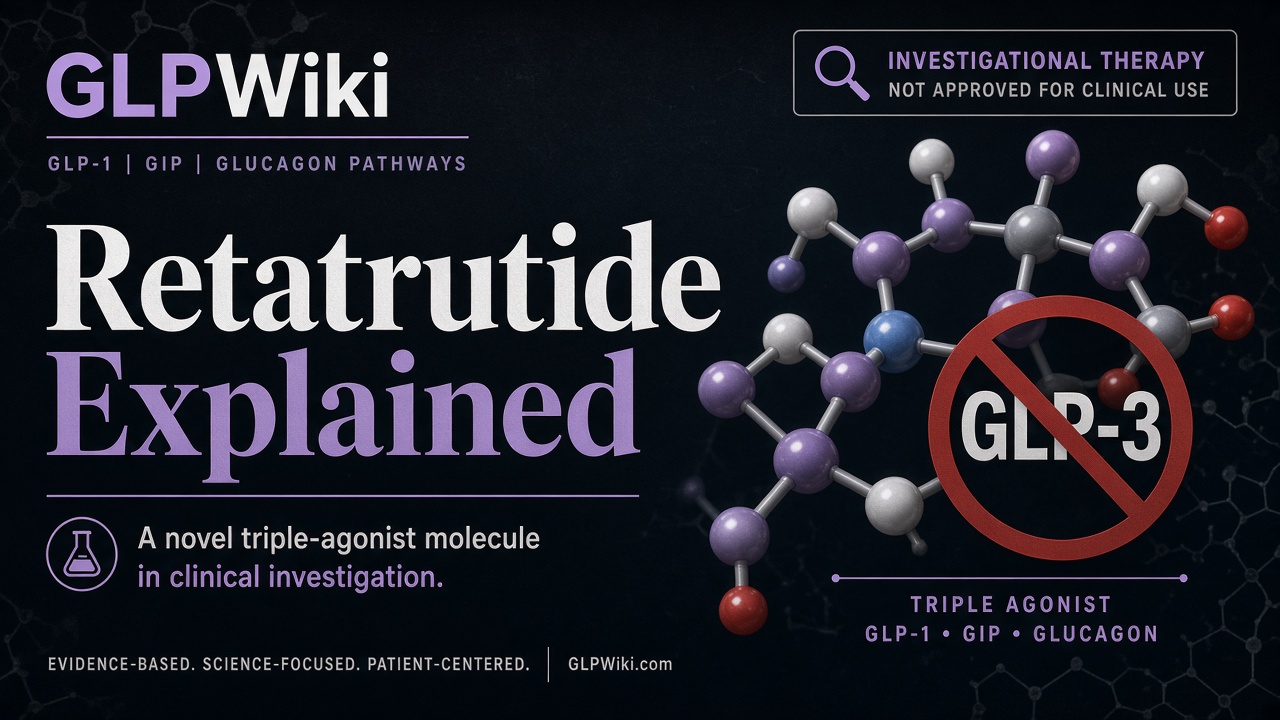
Why a triple agonist picked up a nickname that does not describe a real hormone — and what its trial data actually show.
28 August 2026 · 9 MIN READ
Updated October 2026: read the full rebuilt guide — Retatrutide explained
The nickname problem
There is no hormone called GLP-3. The name spread online as shorthand for “the next one after GLP-1 and GLP-2”, and it stuck to retatrutide because retatrutide adds a third receptor to the two that tirzepatide already hits.
Understanding what the third receptor does is more useful than the label. Retatrutide activates the GLP-1 receptor, the GIP receptor and the glucagon receptor. Glucagon agonism is the genuinely new ingredient: it raises energy expenditure and mobilises hepatic fat, rather than only reducing intake.
What the Phase 2 data showed
In the 48-week Phase 2 obesity trial, mean weight reduction at the highest dose reached roughly a quarter of body weight, with the curve still descending at the end of the study — an unusual finding, since most weight-loss trials plateau.
Separate arms reported large reductions in liver fat, with a majority of participants achieving near-normalisation of hepatic steatosis.
What is still unknown
Phase 3 outcome data are what matter now: durability, cardiovascular safety, discontinuation effects and how much of the loss is lean mass. Glucagon agonism also demands attention to heart rate and glycaemic control.
Until those results publish, retatrutide is an investigational compound. Anything sold today under that name is unregulated material of unverified identity.
Educational reference only. Nothing here is medical advice, a dosing protocol or an endorsement of any product. Investigational and research peptides are not approved medicines.