GLP-3Phase 3
Retatrutide
An investigational triple agonist widely nicknamed "GLP-3" online. There is no GLP-3 hormone or receptor — the name is a consumer shorthand for a molecule that hits three receptors at once.
Half-life ~6 daysRead →
Incretins and the triple agonists people call GLP-3, plus repair peptides, growth-hormone secretagogues, melanocortins and the rest of the field. Every entry states the mechanism, the receptor targets, the evidence, and where it came from.
GLPWiki is an independent, citation-first educational reference. It sells nothing, links to no suppliers, carries no sponsored entries, and publishes no doses or protocols. It explains what a compound is and what has been measured — it is not medical advice.
GLP-3 is not a hormone or a receptor. It is a nickname for retatrutide, an investigational Eli Lilly triple agonist. Not approved by any regulator.
The incretin hormone behind semaglutide and liraglutide — receptor, mechanism, clinical landscape.
Same precursor protein, entirely different receptor and job: growth and repair of the gut lining.
Why the nickname attached itself to retatrutide, and what a triple agonist really does.

Every modern FDA prescription label opens with a box of dense, bold, bulleted text titled "HIGHLIGHTS OF PRESCRIBING INFORMATION." It is the most-read part of the label and the easiest to misread. Over the last several weeks GLPWiki has walked through the numbered sections of the Full Prescribing Information one at a time. This guide covers the part that sits in front of all of them: what 21 CFR 201.57(a) requires Highlights to contain, how to decode the title line, the "Initial U.S. Approval" year, the summarized Boxed Warning, Recent Major Changes and the revision date, and why Highlights is designed as a signpost rather than a substitute for the Full PI. Label-reading literacy only: no doses, no treatment recommendations, no medical advice.
12 MIN READ

GLPWiki's how-to-read-fda-peptide-labeling hub maps the whole Prescribing Information, and our Day 44 guide covered Section 10 Overdosage. This companion explains the section that sits just before it: Section 9 Drug Abuse and Dependence. What 21 CFR 201.57(c)(10) requires in 9.1 Controlled Substance, 9.2 Abuse and 9.3 Dependence; how the DEA schedule symbol shows up on the Highlights title line; the precise label meanings of abuse, misuse, addiction, physical dependence and tolerance; and why current GLP-1 and most peptide labels have no Section 9 at all. Label-reading literacy only: no doses, no treatment recommendations, no medical advice.
12 MIN READ

GLPWiki's how-to-read-fda-peptide-labeling hub maps the whole Prescribing Information, and our GLP-1 indication guides list which product carries which use. This companion goes one level deeper on Section 1 itself: what 21 CFR 201.57(c)(2) requires an indication to contain, how to read an indication sentence in parts, why 'adjunct to diet and exercise' and 'reduce the risk of' are deliberate wording, how Limitations of Use differ from contraindications and from off-label use, what accelerated-approval wording signals, and why a molecule name is never an indication. Label-reading literacy only: no doses, no treatment recommendations, no medical advice.
13 MIN READ
An investigational triple agonist widely nicknamed "GLP-3" online. There is no GLP-3 hormone or receptor — the name is a consumer shorthand for a molecule that hits three receptors at once.
A once-weekly GLP-1 receptor agonist and the most widely prescribed drug in the class. Approved for type 2 diabetes, chronic weight management and cardiovascular risk reduction.
The first approved dual incretin agonist, activating both the GIP and GLP-1 receptors. Approved for type 2 diabetes, chronic weight management and obstructive sleep apnoea in obesity.
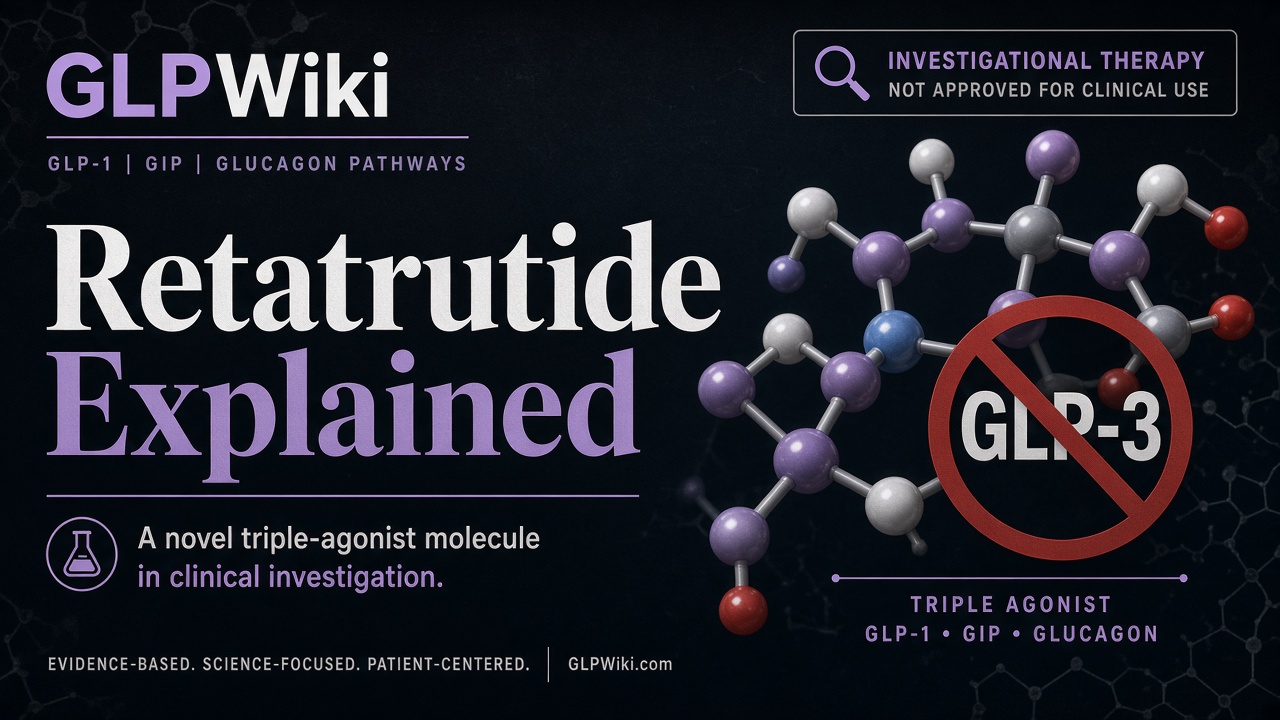
Why a triple agonist picked up a nickname that does not describe a real hormone — and what its trial data actually show.
The most discussed repair peptide on the internet has an enormous animal literature and almost no human trials. Here is the honest state of play.
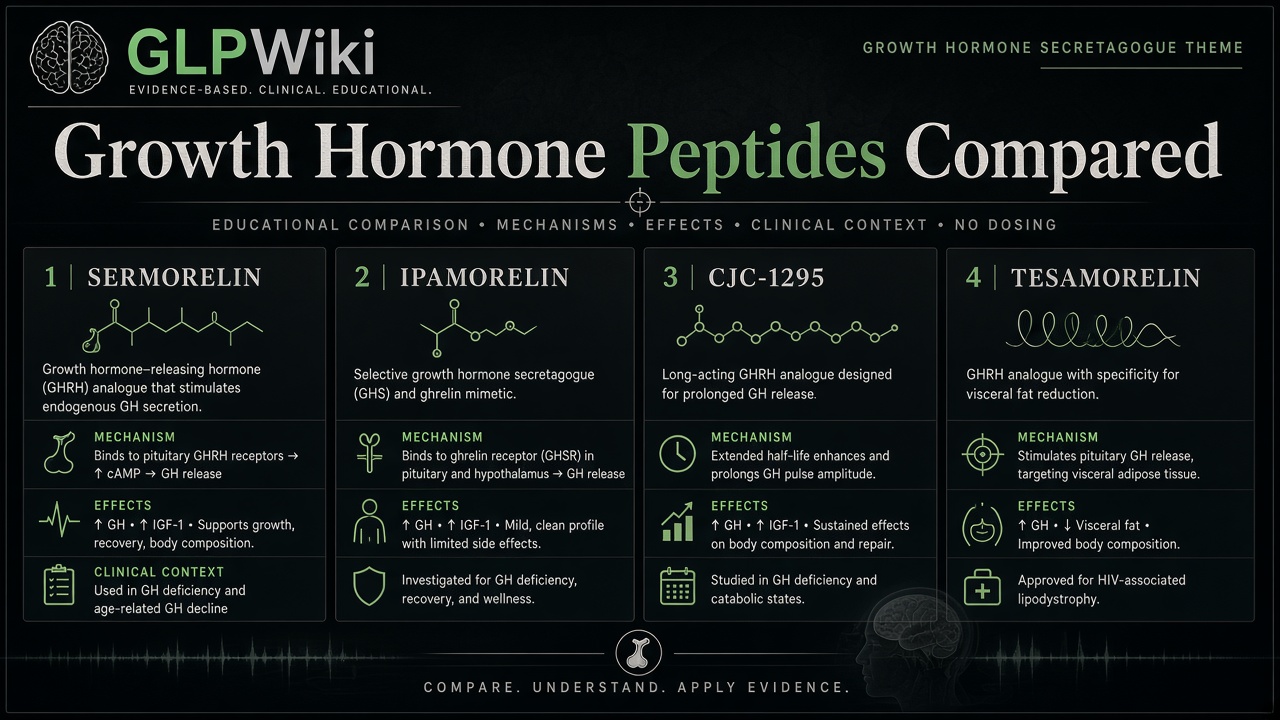
Four peptides that all raise growth hormone, by three different mechanisms, with wildly different levels of evidence.