Dual agonists explained: how tirzepatide combines GIP and GLP-1
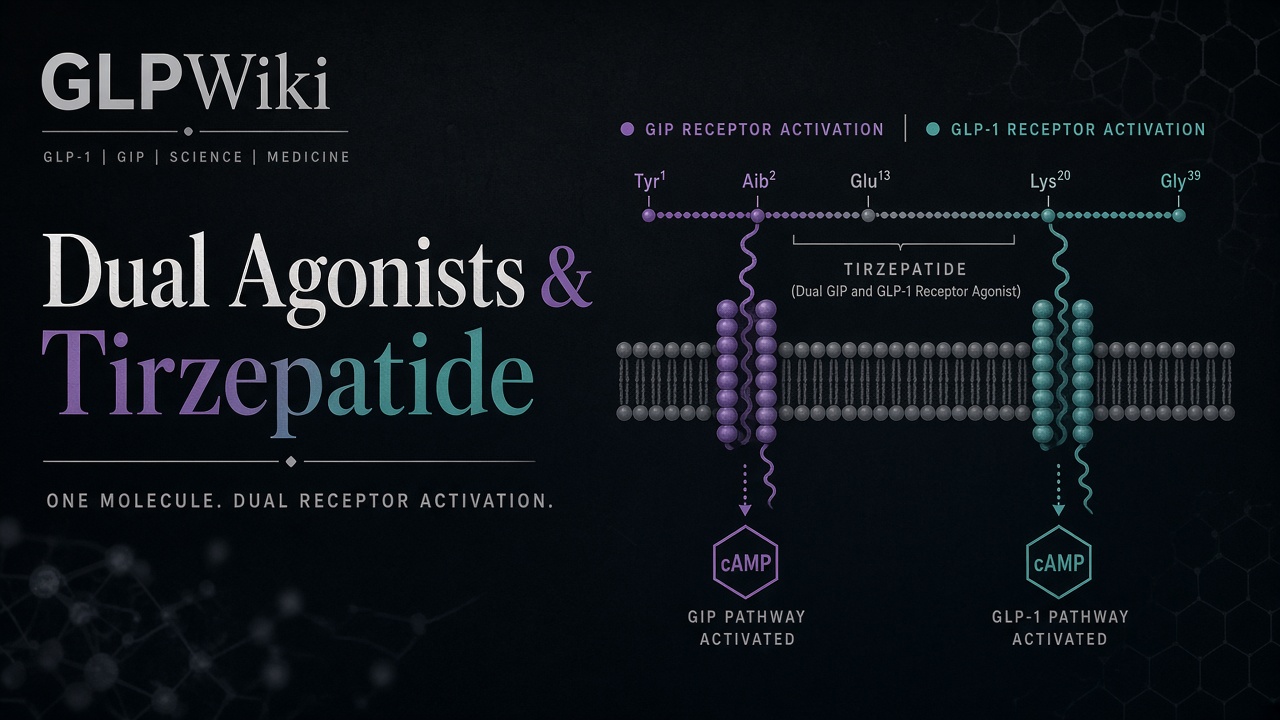
Tirzepatide activates two incretin receptors instead of one. Here is the mechanistic case for dual agonism and what the human trial data actually shows.
UPDATED 09 SEPT 2026 · 11 MIN READ
KEY TAKEAWAYS
- Tirzepatide is a single synthetic peptide engineered to activate both the GIP receptor and the GLP-1 receptor, making it a 'dual agonist' rather than two separate drugs.
- GIP is the other major incretin hormone alongside GLP-1, and its receptor is expressed in fat tissue, pancreas and brain.
- The SURPASS trial programme showed tirzepatide produced greater HbA1c reductions than semaglutide and insulin comparators in adults with type 2 diabetes.
- The SURMOUNT trial programme showed mean weight reductions of up to roughly 20-22% at the highest studied doses over 72 weeks in adults with obesity.
- Tirzepatide is FDA-approved as Mounjaro for type 2 diabetes and as Zepbound for chronic weight management, based on these randomised trial programmes.
- Gastrointestinal adverse effects remain the most common tolerability issue, similar in pattern to single-receptor GLP-1 drugs.
- Dual agonism is mechanistically distinct from the triple-receptor agonists (e.g. retatrutide) discussed elsewhere on GLPWiki, which add glucagon receptor activity.
What 'dual agonist' means
A dual agonist, in the context of incretin pharmacology, is a single molecule engineered to bind and activate two different receptors rather than just one. Tirzepatide is the clearest example: it is one peptide chain, roughly 39 amino acids long, designed so that part of its structure engages the GIP receptor and another part engages the GLP-1 receptor.
This is mechanistically different from simply co-administering two separate drugs. Because both activities reside in one molecule with a single pharmacokinetic profile, the balance of GIP versus GLP-1 activity is fixed by the drug's design rather than adjustable by combining two prescriptions.
GIP: the other incretin
Glucose-dependent insulinotropic polypeptide (GIP) is secreted by K-cells in the upper small intestine, again in response to nutrient intake, and — like GLP-1 — stimulates glucose-dependent insulin secretion from pancreatic beta cells. In people with type 2 diabetes, the insulinotropic effect of GIP is substantially blunted compared with people without diabetes, which for years led researchers to deprioritise it as a drug target.
More recent work has shown that in the presence of concurrent GLP-1 receptor activation, GIP receptor agonism can restore meaningful insulinotropic activity and may act on GIP receptors in adipose tissue and the central nervous system to influence energy balance. This combination rationale is what led to tirzepatide's development as a unimolecular dual agonist rather than a GIP-only drug.
Receptor distribution relevant to dual agonism
GIP receptors are found in pancreatic beta cells, adipocytes, bone, and regions of the central nervous system involved in appetite regulation, giving dual agonists a broader tissue footprint than a GLP-1-only drug.
- Pancreatic beta cells: co-stimulation of insulin secretion with GLP-1
- Adipose tissue: studied effects on lipid metabolism
- Central nervous system: appetite-related signalling under active study
How tirzepatide was developed and approved
Tirzepatide was developed by Eli Lilly and designed with a fatty acid moiety attached to the peptide backbone, similar in concept to the acylation strategy used in semaglutide, which allows it to bind circulating albumin and extends its half-life to roughly five days, supporting once-weekly dosing.
The FDA approved tirzepatide under the brand name Mounjaro in May 2022 for adults with type 2 diabetes, based on the SURPASS trial programme, and later approved it under the brand name Zepbound in November 2023 for chronic weight management in adults with obesity or overweight with at least one weight-related condition, based on the SURMOUNT programme.
Human trial evidence: glycaemic control
The SURPASS series of Phase 3 trials compared tirzepatide against placebo, against titrated basal insulin, and head-to-head against semaglutide 1 mg in adults with type 2 diabetes. Across these trials, tirzepatide produced dose-dependent HbA1c reductions of approximately 2 percentage points at higher doses, generally exceeding the comparator arms, including the active semaglutide comparator in SURPASS-2, published in the New England Journal of Medicine.
These results were accompanied by weight loss in most trial arms, a notable departure from older glucose-lowering therapies such as sulfonylureas or insulin, which are typically associated with weight gain.
Human trial evidence: weight management
The SURMOUNT-1 trial, published in the New England Journal of Medicine in 2022, enrolled adults with obesity or overweight without diabetes and reported mean weight reductions of approximately 15% at the 5 mg dose, 19.5% at 10 mg, and 20.9% at the highest 15 mg dose over 72 weeks, compared with roughly 3% in the placebo group.
Subsequent SURMOUNT trials extended findings to people with type 2 diabetes (SURMOUNT-2, where weight loss was somewhat attenuated, consistent with the generally smaller weight-loss response seen in people with diabetes across the incretin drug class) and to people with obstructive sleep apnoea and obesity (SURMOUNT-OSA), where tirzepatide reduced apnoea-hypopnoea index alongside body weight.
Safety and tolerability
The adverse event profile for tirzepatide mirrors that of single-receptor GLP-1 drugs: nausea, diarrhoea, vomiting and constipation are the most frequently reported events, generally most prominent during dose escalation. Discontinuation rates due to gastrointestinal adverse events were higher than placebo across the SURPASS and SURMOUNT trials.
As with GLP-1 receptor agonists, tirzepatide's FDA label carries a boxed warning regarding thyroid C-cell tumours based on rodent carcinogenicity findings, and it is contraindicated in patients with a personal or family history of medullary thyroid carcinoma or Multiple Endocrine Neoplasia syndrome type 2.
How dual agonism differs from single- and triple-receptor drugs
Compared with single-receptor GLP-1 drugs such as semaglutide, tirzepatide's added GIP receptor activity is the leading hypothesis for its somewhat larger average weight-loss effect in head-to-head and cross-trial comparisons, though direct randomised comparisons remain limited in number.
Compared with triple-receptor agonists such as retatrutide, described in GLPWiki's 'GLP-3' explainer, tirzepatide does not activate the glucagon receptor, which is the additional mechanism triple agonists are testing for further gains in energy expenditure. Each additional receptor target represents a distinct hypothesis that must be validated with its own randomised trial evidence rather than assumed by analogy.
Frequently asked questions
- Is tirzepatide the same as semaglutide with an extra ingredient?
- No. Tirzepatide is a single peptide engineered so one molecule activates both the GIP and GLP-1 receptors; it is not a combination of two separate drugs.
- What is the difference between Mounjaro and Zepbound?
- They contain the same active ingredient, tirzepatide. Mounjaro is FDA-approved for type 2 diabetes and Zepbound is FDA-approved for chronic weight management; approvals rest on different trial programmes (SURPASS and SURMOUNT respectively).
- How much weight loss did SURMOUNT-1 report?
- Mean reductions of approximately 15% at 5 mg, 19.5% at 10 mg and 20.9% at 15 mg over 72 weeks in adults with obesity or overweight without diabetes, versus about 3% with placebo.
- Does GIP receptor activation help on its own?
- Human data on GIP-only agonism are limited and its insulinotropic effect is blunted in type 2 diabetes; most of the evidence for benefit comes from combining GIP agonism with concurrent GLP-1 receptor activation, as in tirzepatide.
- Is tirzepatide the same mechanism as retatrutide?
- No. Tirzepatide is a dual GIP/GLP-1 receptor agonist. Retatrutide additionally activates the glucagon receptor, making it a triple agonist with a distinct trial programme.
- What are the most common side effects reported in trials?
- Gastrointestinal effects — nausea, diarrhoea, vomiting and constipation — were the most commonly reported adverse events across the SURPASS and SURMOUNT trial programmes, generally most pronounced during dose escalation.
SOURCES
- 01Tirzepatide versus Semaglutide Once Weekly in Type 2 Diabetes (SURPASS-2)— New England Journal of Medicine
- 02Tirzepatide Once Weekly for the Treatment of Obesity (SURMOUNT-1)— New England Journal of Medicine
- 03Tirzepatide for Obstructive Sleep Apnea and Obesity (SURMOUNT-OSA)— New England Journal of Medicine
- 04Mounjaro (tirzepatide) Prescribing Information— U.S. Food and Drug Administration
- 05Zepbound (tirzepatide) Prescribing Information— U.S. Food and Drug Administration
- 06Glucose-dependent insulinotropic polypeptide (GIP) physiology— PubMed / Endocrine Reviews
EDUCATIONAL REFERENCE ONLY · Not medical advice. Nothing here diagnoses, treats, cures or prevents any disease, and nothing here is a dosing recommendation. Consult a licensed clinician before any treatment decision.