Surrogate endpoints and biomarkers literacy: how HbA1c, body weight, blood pressure, kidney markers and liver biopsies stand in for outcomes in GLP-1 trials and labels

Most GLP-1 headlines are about numbers measured in a lab or clinic: HbA1c, pounds lost, blood pressure, kidney filtration, liver biopsy scores. Those numbers are biomarkers, and when a trial uses one in place of how people feel, function or survive, it becomes a surrogate endpoint. This guide explains the FDA-NIH BEST definitions; the difference between candidate, 'reasonably likely' and validated surrogates; FDA's Table of Surrogate Endpoints and how it relates to traditional and accelerated approval (including Wegovy's MASH indication); how statisticians validate surrogates, from Prentice's 1989 criteria to trial-level meta-analyses; the ways Fleming and DeMets showed surrogates can mislead; and cautionary cases such as CAST, torcetrapib, intensive glucose lowering and the rosiglitazone history behind FDA's 2008 cardiovascular guidance. It then covers HbA1c, body weight, blood pressure, kidney markers and MASH histology. Educational only: no doses, no treatment advice and no product rankings.
UPDATED 27 NOV 2026 · 38 MIN READ
KEY TAKEAWAYS
- A biomarker is something measured, such as HbA1c, blood pressure or a biopsy score. A surrogate endpoint is a biomarker used in a trial in place of a direct measure of how patients feel, function or survive, because it is expected to predict that benefit.
- FDA sorts surrogates by strength of evidence: candidate, 'reasonably likely to predict clinical benefit' (which can support accelerated approval) and validated (which can support traditional approval). Acceptability is decided case by case for a specific disease, population and drug type.
- FDA's Table of Surrogate Endpoints lists serum HbA1c for type 2 diabetes, blood pressure for hypertension, eGFR or serum creatinine for chronic kidney disease (traditional approval) and liver histology for noncirrhotic MASH (accelerated approval). It has no entry for obesity: in weight-management labels, weight reduction is the indication itself.
- A strong correlation between a marker and an outcome is not enough. Validation asks whether a treatment's effect on the marker predicts its effect on the outcome, ideally across many randomized trials and drug classes (trial-level surrogacy), not only whether people with better markers do better (individual-level association).
- Surrogates mislead when the marker is not on the main causal path, when the drug works through other paths, or when it has off-target harms. CAST, torcetrapib, ACCORD and the rosiglitazone history are the classic examples, and they shaped how GLP-1 medicines are evaluated today.
- HbA1c reliably tracks microvascular risk, but glucose lowering alone did not guarantee cardiovascular benefit. That is why GLP-1 heart claims come from outcome trials such as LEADER, SUSTAIN-6, REWIND and SELECT that counted heart attacks, strokes and deaths.
- Kidney research has validated sustained eGFR decline, eGFR slope and (with more caveats) albuminuria as surrogates under defined conditions. FLOW's primary outcome mixed hard events with a sustained 50% eGFR decline, and Ozempic's kidney indication reflects that composite.
- Wegovy's MASH indication rests on 72-week liver biopsies under accelerated approval. The label says continued approval may depend on verifying clinical benefit, and FDA required the ongoing 240-week ESSENCE trial to test progression to cirrhosis, decompensation, transplant and death.
Why surrogate endpoints sit behind most GLP-1 headlines
Almost every number in a GLP-1 news story is a measurement rather than a life event: 'lowered HbA1c,' 'lost 15% of body weight,' 'reversed fatty liver disease,' 'slowed kidney decline.' Each describes something measured in a blood test, on a scale, with a blood-pressure cuff or under a microscope. What patients and clinicians ultimately care about is different: fewer heart attacks and strokes, less kidney failure, less blindness and amputation, fewer liver transplants, longer life, and feeling and functioning better.
When a clinical trial measures the first kind of number as a stand-in for the second, it is using a surrogate endpoint. Surrogates are not a trick. They let trials finish in months instead of decades, with hundreds of participants instead of tens of thousands, and some are among the best-validated tools in medicine. FDA states that between 2010 and 2012 it approved 45 percent of new drugs based on a surrogate endpoint.
But surrogates can also fail, sometimes badly. Several of the most important lessons in modern drug regulation came from medicines that improved a marker convincingly while leaving patients no better off, or worse off. Those lessons explain why GLP-1 medicines were approved for blood sugar on HbA1c, yet had to run years-long cardiovascular outcome trials; why weight-management labels claim weight reduction rather than longer life; and why Wegovy's liver indication carries an accelerated-approval caveat.
This guide, part of GLPWiki's trial-literacy series, builds on the cardiovascular outcomes trials, absolute versus relative risk and expedited programs guides. Its focus is what a measured marker can and cannot tell you about outcomes.
Biomarker, surrogate endpoint, clinical outcome: the BEST definitions
In 2016, FDA and the National Institutes of Health published a shared glossary called BEST (Biomarkers, EndpointS, and other Tools) so that regulators, researchers and companies would use these words the same way. It built on a 2001 framework from the NIH Biomarkers Definitions Working Group, which described a clinical endpoint as a characteristic that reflects how a patient feels, functions or survives.
A biomarker, in FDA's wording, is 'a defined characteristic that is objectively measured as an indicator of normal biological processes, pathologic processes, or responses to an exposure or intervention.' It can be molecular (a protein in blood), histologic (a biopsy finding), radiographic (an image) or physiologic (blood pressure). FDA adds a point that is easy to miss: 'A biomarker is not an assessment of how an individual feels, functions, or survives.'
BEST defines seven biomarker categories: susceptibility/risk, diagnostic, monitoring, prognostic, predictive, pharmacodynamic/response and safety. The same measurement can belong to different categories in different uses. Liver fibrosis stage, for example, is prognostic (higher stages carry higher risk), can be used for enrollment (only people with stage 2 or 3 fibrosis enter certain trials) and can be a response marker (did fibrosis improve on treatment?).
A surrogate endpoint is a biomarker used in a specific way: as a trial endpoint that substitutes for a direct measure of how patients feel, function or survive. FDA's surrogate-endpoint resources page puts it this way: a surrogate 'does not measure the clinical benefit of primary interest in and of itself, but rather is expected to predict that clinical benefit.' The 21st Century Cures Act wrote a legal definition into section 507 of the Federal Food, Drug, and Cosmetic Act: a marker 'that is not itself a direct measurement of clinical benefit' and that is either 'known to predict clinical benefit' (usable for traditional approval) or 'reasonably likely to predict clinical benefit' (usable for accelerated approval).
Biomarkers are also distinct from clinical outcome assessments (COAs). A COA measures how someone feels or functions through a report from a patient, clinician or observer, or through a performance test. The Kansas City Cardiomyopathy Questionnaire used in heart-failure trials and a six-minute walk test are COAs; blood pressure and HbA1c are biomarkers. A COA measures benefit directly, so it is not a surrogate, although it can raise its own questions about what size of change matters.
Candidate, reasonably likely, validated: FDA's levels of evidence
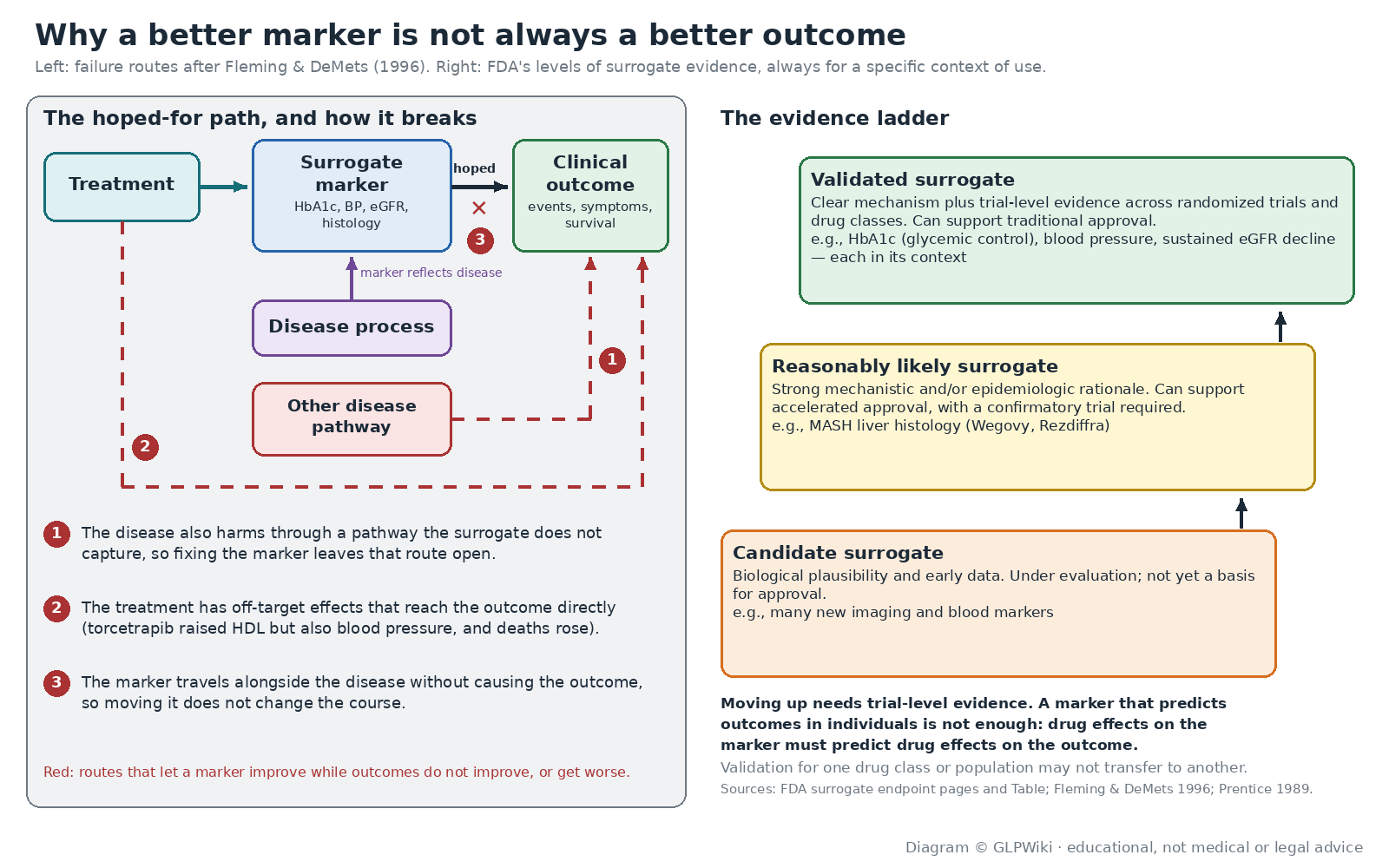
FDA describes three levels of clinical validation for surrogate endpoints. Candidate surrogates are 'still under evaluation for their ability to predict clinical benefit.' Validated surrogates are 'supported by a clear mechanistic rationale and clinical data providing strong evidence that an effect on the surrogate endpoint predicts a specific clinical benefit,' and FDA accepts them as evidence of benefit for traditional approval. In between are reasonably likely surrogates, which have 'strong mechanistic and/or epidemiologic rationale' but not enough clinical data to count as validated.
FDA's own example of a validated surrogate is systolic blood pressure. Many trials, using many different blood-pressure-lowering medicines, showed that lowering systolic pressure reduced stroke, so a new antihypertensive can be approved on blood pressure alone, with smaller and faster trials. Validation took decades of epidemiology and randomized outcome trials across several drug classes.
Reasonably likely surrogates are the basis of accelerated approval. Under section 506(c) of the Act and 21 CFR 314.510, FDA may approve a drug for a serious or life-threatening condition on an effect on a surrogate 'reasonably likely' to predict clinical benefit, subject to a requirement that the company conduct studies 'to verify and describe' that benefit. FDA's accelerated approval page explains that if the confirmatory trial shows clinical benefit, the drug gets traditional approval; if not, 'FDA has regulatory procedures in place that could lead to removing the drug from the market.' The expedited programs guide on GLPWiki covers those mechanics in detail.
The levels describe evidence, not a permanent label. A surrogate is validated for a particular disease, population and often a type of intervention, which FDA calls the context of use. FDA stresses that surrogates 'can be relied upon to predict, or correlate with, clinical benefit in a context of use' and that it sometimes needs to 're-evaluate surrogate endpoints clinically, based on current scientific understanding.' A marker that works for one drug class can fail for another, as the cautionary cases below show.
Inside FDA's Table of Surrogate Endpoints
Section 507 of the Act requires FDA to publish a list of 'surrogate endpoints which were the basis of approval or licensure' of drugs and biologics. FDA's Table of Surrogate Endpoints That Were the Basis of Drug Approval or Licensure, last updated on the page as of October 29, 2026, fulfills that requirement. Each row names a disease or use, the patient population, the surrogate endpoint, the type of approval it supported (traditional, accelerated or both) and the drug mechanism of action.
Several rows matter for GLP-1 readers. For type 2 diabetes mellitus, the surrogate is serum hemoglobin A1c, used for traditional approval of glucose-lowering drugs. For hypertension, it is blood pressure, traditional approval, marked 'mechanism agnostic' (meaning the surrogate is not tied to one causal pathway or drug mechanism). For chronic kidney disease 'secondary to multiple etiologies,' it is estimated glomerular filtration rate or serum creatinine, again traditional and mechanism agnostic. For hypercholesterolemia, it is serum LDL cholesterol.
For metabolic dysfunction-associated steatohepatitis (MASH), the table lists 'precirrhotic NASH patients with liver fibrosis' and a histopathology endpoint: resolution of steatohepatitis with no worsening of fibrosis, or improvement of fibrosis with no worsening of steatohepatitis, or both. That row is marked accelerated, with anti-fibrotic and anti-inflammatory mechanisms. A separate kidney row lists change in urine protein-to-creatinine ratio for primary glomerular diseases with significant proteinuria, for accelerated or traditional approval.
There is no row for obesity or body weight. That absence is informative rather than an oversight. In FDA's obesity framework, weight reduction is the treatment goal and the labeled indication ('to reduce excess body weight and maintain weight reduction long term'), not a stand-in for some other outcome. Claims beyond weight, such as reduced cardiovascular events or improved sleep apnea, need their own evidence.
FDA attaches strong caveats. The table is 'a reference guide to help inform discussion,' and 'the acceptability of these surrogate endpoints for use in a particular drug or biologic development program will be determined on a case-by-case basis,' depending on 'the disease, studied patient population, therapeutic mechanism of action, and availability of current treatments.' A row in the table is therefore not a guarantee that the surrogate predicts benefit for every new drug.
Independent researchers have tested how strong the evidence behind the table is. Wallach and colleagues (JAMA, 2024) looked at 37 surrogate markers in the table used as primary endpoints for 32 nononcologic chronic diseases. For 22 of them (59%), they found no eligible meta-analysis linking the marker to clinical outcomes; among meta-analyses that reported correlation statistics, a minority reported at least one association classified as high strength. They concluded that most such markers 'lacked high-strength evidence' from published meta-analyses. That does not mean the markers are wrong, but it shows why validation is an ongoing question.
An endpoint map of GLP-1 indications
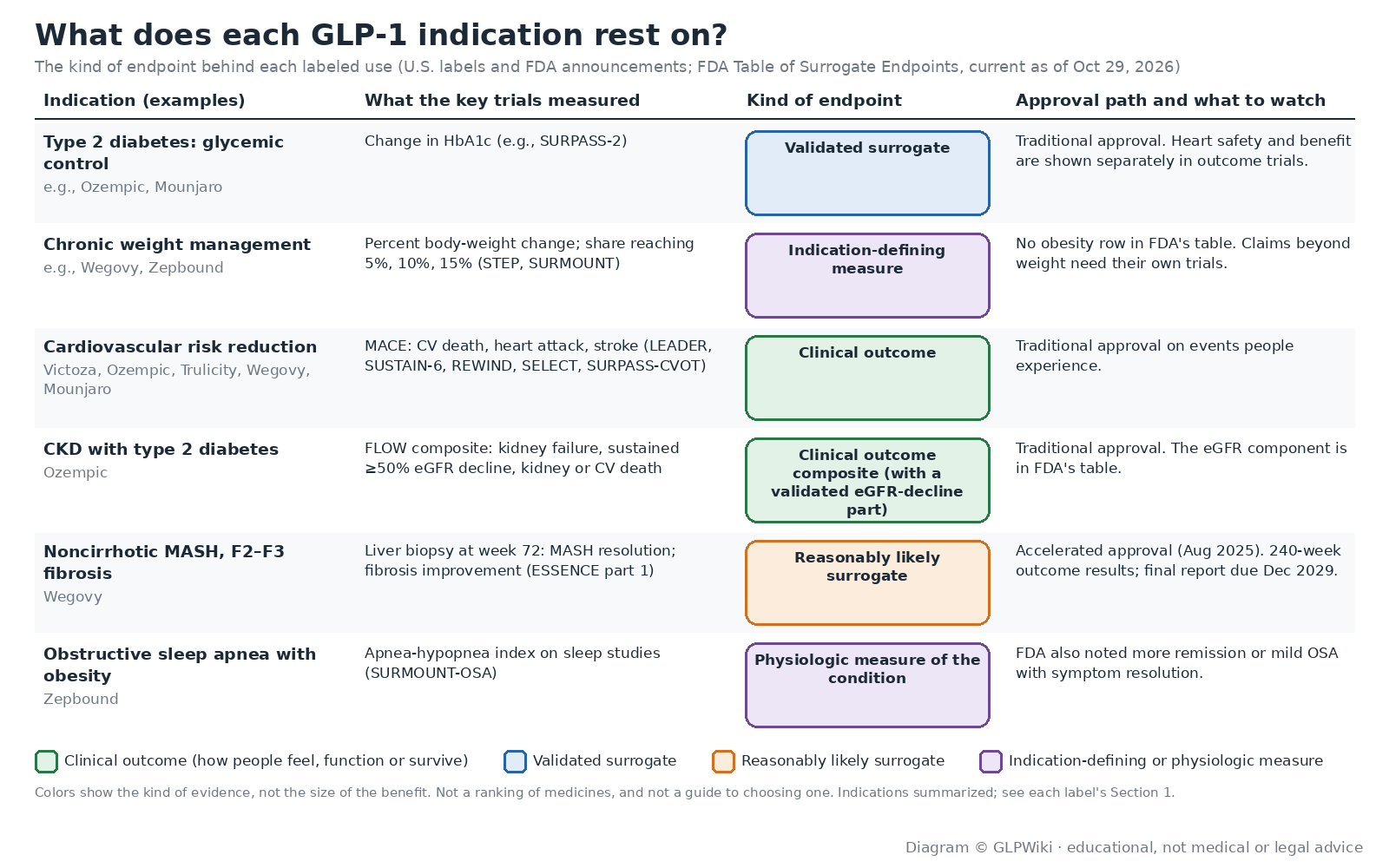
GLP-1 receptor agonists and the dual GIP/GLP-1 agonist tirzepatide are a useful teaching set because their labeled indications rest on very different kinds of endpoints. Reading Section 1 (Indications and Usage) next to Section 14 (Clinical Studies) of each label shows which endpoint stands behind which claim.
Glycemic control in type 2 diabetes rests on HbA1c, a validated surrogate listed in FDA's table. Cardiovascular risk-reduction indications rest on clinical outcomes: major adverse cardiovascular events (cardiovascular death, nonfatal heart attack, nonfatal stroke) counted in LEADER, SUSTAIN-6, REWIND, SELECT and, for Mounjaro, the active-controlled SURPASS-CVOT. Chronic weight management rests on percentage change in body weight, which is the indication itself.
The kidney indication on Ozempic ('to reduce the risk of sustained eGFR decline, end-stage kidney disease, and cardiovascular death in adults with type 2 diabetes mellitus and chronic kidney disease') rests on FLOW, whose primary composite mixed clinical events with a sustained eGFR decline of at least 50%. Wegovy's MASH indication rests on liver histology at 72 weeks, under accelerated approval. Zepbound's obstructive sleep apnea indication rests on the apnea-hypopnea index (AHI) measured in sleep studies, with FDA also noting more participants reached remission or mild sleep apnea with resolution of symptoms.
The diagram below lays these out side by side. It is a reading aid, not a ranking: it shows what kind of evidence each indication rests on, which is a different question from how large or important the benefit is for any person.
How a surrogate is validated: from Prentice to meta-analysis
The intuitive test of a surrogate is correlation: people with higher blood pressure have more strokes, so blood pressure must be a good surrogate. Statisticians realized decades ago that this is not enough. What matters for a trial is whether a treatment's effect on the marker predicts the treatment's effect on the outcome. A marker can be strongly prognostic and still be a poor surrogate for a particular drug.
Ross Prentice (Statistics in Medicine, 1989) proposed a strict definition. A surrogate should 'yield a valid test of the null hypothesis of no association between treatment and the true response.' Operationally, the surrogate must 'capture' the whole relationship between treatment and outcome: once you know a person's surrogate history, knowing which treatment they received should tell you nothing more about their outcome risk. Few real markers meet that standard fully.
Freedman, Graubard and Schatzkin (1992) proposed a softer measure, the proportion of the treatment effect explained by the surrogate. They showed that unless the unadjusted treatment effect is more than four times its standard error, a single study can usually support only 'a weak form of validation.' Buyse and Molenberghs (Biometrics, 1998) replaced the proportion explained with two quantities, the relative effect of treatment on the outcome versus the surrogate and the individual-level association between the two, and showed that validation 'is shown to require large numbers of observations.'
Individual-level versus trial-level surrogacy
Buyse and colleagues (Biostatistics, 2000) separated two questions. Individual-level surrogacy asks whether, within a trial, a person's surrogate value predicts that person's outcome. Trial-level surrogacy asks whether, across many trials, the size of the treatment effect on the surrogate predicts the size of the treatment effect on the outcome. Only the second question tells a regulator that a new drug's effect on the marker will translate into an effect on outcomes.
Trial-level validation needs many randomized trials, ideally with different drugs and mechanisms. Daniels and Hughes (1997) developed Bayesian meta-analytic methods that produce a prediction interval for the outcome effect given an observed marker effect; their example was CD4 cell counts in HIV trials. The kidney meta-analyses described below report trial-level R-squared values, where 1.0 means the marker effect perfectly predicts the outcome effect across trials.
Evidence schemas and thresholds
Weir and Walley (2006) reviewed the competing statistical schools and how validation might fit drug development. Lassere (2008) proposed the Biomarker-Surrogacy Evaluation Schema, which scores study design, target outcome and statistical evidence and reserves the word 'surrogate' for markers reaching the top two of five evidence levels. A related idea is the surrogate threshold effect, the smallest marker effect that predicts a nonzero outcome effect. Lassere and colleagues (2012) estimated such thresholds for systolic and diastolic blood pressure in stroke prevention.
For readers, 'this marker is associated with outcomes' and 'this drug's change in this marker will deliver outcome benefits' are separate claims. The second usually needs randomized outcome trials, preferably several.
Why surrogates fail: the Fleming and DeMets pathways
In 1996, Thomas Fleming and David DeMets published 'Surrogate end points in clinical trials: are we being misled?' in the Annals of Internal Medicine. Drawing on examples from heart-rhythm drugs, heart failure, HIV and osteoporosis, they laid out a small set of reasons a surrogate can fail even when it is strongly linked to the disease.
First, the surrogate may not be on the causal pathway of the disease at all; it may simply travel alongside it. Second, the disease may progress through several causal pathways, and the treatment may affect only the one the surrogate measures, leaving other routes to harm untouched. Third, the surrogate may not respond to the treatment's real effect, or may respond to effects that do not matter. Fourth, and often most important, the treatment may act through mechanisms independent of the disease process, including unintended harmful effects that the surrogate never captures.
Their practical conclusion was that surrogates are valuable for screening ideas in early-phase trials, but definitive evidence of benefit usually needs trials that measure clinical outcomes, unless a surrogate has been rigorously validated for the relevant context. Fleming and Powers (2012) restated the argument for a new generation of trials, emphasizing that reliability is 'specific to the context of use' of the biomarker.
The JAMA Users' Guide on surrogate end points by Bucher and colleagues (1999) turned this into reader questions: is there a strong, independent, consistent association between the surrogate and the outcome; have randomized trials of other drug classes shown that improving the surrogate improves outcomes; and have trials within the same drug class shown the same thing? In the same issue, Psaty and colleagues and FDA's Robert Temple examined how far cardiovascular drug approvals can rely on risk-factor surrogates.
When surrogates misled: the cases that shaped today's rules
Several episodes show the Fleming-DeMets failure routes in practice, and they are part of the backstory of how GLP-1 medicines are evaluated.
CAST: suppressing irregular beats increased deaths
After a heart attack, frequent premature ventricular beats on a Holter recording predict sudden death. Drugs that suppressed those beats seemed a logical way to prevent it. The Cardiac Arrhythmia Suppression Trial (CAST) tested that idea by randomizing patients whose ectopic beats had been suppressed by encainide, flecainide or moricizine to continue the drug or switch to placebo.
The 1989 preliminary report found the opposite of what was expected. With encainide or flecainide, deaths from arrhythmia and nonfatal cardiac arrests occurred in 33 of 730 patients (4.5%) versus 9 of 725 (1.2%) on placebo, a relative risk of 3.6, and total mortality was 56 of 730 (7.7%) versus 22 of 725 (3.0%), a relative risk of 2.5. That part of the trial was stopped. The drugs had done exactly what the surrogate asked of them while increasing deaths.
Torcetrapib and the CETP inhibitors: better lipids, no benefit or harm
Low HDL cholesterol is associated with heart disease, so raising HDL looked like a promising target. In ILLUMINATE (15,067 high-risk patients), the CETP inhibitor torcetrapib raised HDL cholesterol by 72.1% and lowered LDL cholesterol by 24.9% at 12 months. It also raised systolic blood pressure by 5.4 mm Hg and altered potassium, sodium, bicarbonate and aldosterone. Cardiovascular events increased (hazard ratio 1.25, 95% CI 1.09 to 1.44) and so did deaths from any cause (hazard ratio 1.58, 1.14 to 2.19).
Later CETP inhibitors without torcetrapib's blood-pressure effect also failed to deliver benefit despite large lipid changes. Dalcetrapib raised HDL substantially but did not change the primary outcome (hazard ratio 1.04) in patients after an acute coronary syndrome. Evacetrapib lowered LDL by 31.1% and raised HDL by 133.2%, yet the primary outcome occurred in 12.9% versus 12.8% (hazard ratio 1.01). HDL raising by this mechanism turned out not to be a reliable surrogate.
Intensive glucose lowering: ACCORD
In ACCORD, adults with type 2 diabetes at high cardiovascular risk were assigned to a strategy targeting near-normal HbA1c or to standard targets. Median HbA1c settled at 6.4% versus 7.5%. The primary cardiovascular composite was not significantly reduced (hazard ratio 0.90, 95% CI 0.78 to 1.04), but deaths were higher with intensive therapy: 257 versus 203 (hazard ratio 1.22, 1.01 to 1.46), and the intensive arm was stopped early. A lower HbA1c, pursued aggressively in that population, did not translate into fewer deaths.
Rosiglitazone and FDA's 2008 cardiovascular guidance
Rosiglitazone was approved, like other diabetes drugs of its era, on HbA1c. In 2007, a meta-analysis of 42 trials by Nissen and Wolski reported an odds ratio for myocardial infarction of 1.43 (95% CI 1.03 to 1.98) compared with control, with the authors noting they lacked patient-level data. The RECORD outcome trial later reported noninferiority for its primary cardiovascular outcome (hazard ratio 0.99, 0.85 to 1.16) but confirmed a doubled risk of heart failure (hazard ratio 2.10).
The episode showed that a drug could lower HbA1c without anyone knowing its effect on heart outcomes. In December 2008 FDA asked sponsors of new type 2 diabetes drugs to rule out an unacceptable increase in cardiovascular risk, using risk-ratio margins of 1.8 and 1.3. Rosiglitazone's access was restricted under a risk evaluation and mitigation strategy (REMS) approved for Avandia in May 2011; after a November 2013 FDA notification based on the readjudicated RECORD results, FDA approved labeling and REMS modifications in 2014, and in 2015 determined that a REMS was no longer required. FDA withdrew the 2008 guidance in March 2020. The cardiovascular outcomes trials guide on GLPWiki tells the rest of that story.
Weight-loss drugs that lowered weight but not risk
FDA's January 2025 draft obesity guidance is explicit that weight is not automatically a surrogate for outcomes. It notes that 'some prospective trials of pharmacological weight-reduction interventions have failed to show benefit on certain clinical outcomes' and that 'some products have been associated with potential harm.' In SCOUT, sibutramine in people with preexisting cardiovascular conditions produced modest additional weight loss yet a higher rate of the primary cardiovascular outcome (11.4% versus 10.0%, hazard ratio 1.16). In CAMELLIA-TIMI 61, lorcaserin roughly doubled the share reaching 5% weight loss (38.7% versus 17.4%) and was noninferior for major cardiovascular events, but in February 2020 FDA asked the manufacturer to withdraw it from the US market because the same trial showed an increased occurrence of cancer.
What the pattern means
Meta-research suggests these are not isolated anecdotes. Ciani and colleagues (BMJ, 2013) compared 84 trials with surrogate primary outcomes and 101 with patient-relevant outcomes and found that trials using surrogates reported larger treatment effects, by a ratio of odds ratios of about 1.47, not explained by differences in risk of bias. Yudkin, Lipska and Montori called reliance on glucose targets in diabetes 'the idolatry of the surrogate.' None of this makes surrogates useless; it makes them claims that need checking.
HbA1c: a validated surrogate with limits
HbA1c reflects average blood glucose over roughly the preceding two to three months and is the surrogate on which essentially every type 2 diabetes drug, including GLP-1 receptor agonists and tirzepatide, was first approved for glycemic control. Its standing rests on strong evidence for microvascular complications.
In type 1 diabetes, the Diabetes Control and Complications Trial (1993) found that intensive therapy reduced the risk of developing retinopathy by 76% in its primary-prevention cohort. In type 2 diabetes, UKPDS 33 (1998) compared intensive and conventional glucose control over 10 years, with HbA1c of 7.0% versus 7.9%. Risk was 12% lower for any diabetes-related endpoint and 25% lower for microvascular endpoints, but differences in diabetes-related death and all-cause mortality were not statistically significant. The observational UKPDS 35 analysis estimated that each 1% lower updated mean HbA1c was associated with 37% lower risk of microvascular complications and 14% lower risk of myocardial infarction.
The cardiovascular picture was slower and less consistent. In the 10-year post-trial follow-up (UKPDS 80), risk reductions for myocardial infarction and death emerged in the original intensive groups even though HbA1c differences disappeared within a year. ACCORD, as described above, found more deaths with aggressive targets. And rosiglitazone showed that a drug's effect on HbA1c does not reveal its effect on the heart. Together these findings explain why HbA1c remains a validated surrogate for glycemic efficacy while cardiovascular safety and benefit must be shown with outcome trials.
That is the structure of GLP-1 labels. Section 14 of a diabetes label reports HbA1c change versus placebo or an active comparator, such as SURPASS-2, in which the differences between tirzepatide groups and semaglutide ranged from about -0.15 to -0.45 percentage points. Cardiovascular indications come from separate outcome trials: LEADER (hazard ratio 0.87; 13.0% versus 14.9%), SUSTAIN-6 (0.74; 6.6% versus 8.9%) and REWIND (0.88; 12.0% versus 13.4%). An HbA1c difference in a head-to-head trial does not, by itself, tell you about differences in heart, kidney or eye outcomes.
Body weight: the endpoint is the indication
In obesity drug development, FDA treats weight change differently from HbA1c or blood pressure. Its January 2025 draft guidance (Revision 2) says the primary efficacy endpoint 'should be a comparison of the mean percentage change in body weight' between drug and control over at least a year, and it defines weight reduction as 'a long-term reduction in excess adiposity (body fat) with a goal of reduced morbidity and mortality.'
Because some weight-loss drugs failed to improve or worsened outcomes, the guidance says claims 'will generally be limited to weight reduction unless other benefits related to complications (e.g., improvement in sleep apnea) have also been demonstrated.' That is why the Wegovy and Zepbound weight-management indications speak of reducing excess body weight and maintaining weight reduction, not of preventing heart attacks, and why Wegovy's cardiovascular indication came only after SELECT showed fewer major cardiovascular events (6.5% versus 8.0%, hazard ratio 0.80).
The guidance also warns against stretching weight-related biomarkers into new indications. Improving components of the metabolic syndrome in people without a disease diagnosis 'is not clearly tied to improvement in clinical outcomes'; a claim to delay type 2 diabetes would need clinical benefits of the delay, because 'delayed biochemical diagnosis of type 2 diabetes has not been shown to improve microvascular outcomes.' It adds that changes in fat mass measured by imaging are 'not as clearly tied to clinical outcomes as change in BMI.'
Newer indications show the alternatives to surrogate reasoning. In obstructive sleep apnea, SURMOUNT-OSA used the apnea-hypopnea index as its primary measure (estimated differences of about 20 and 24 fewer events per hour versus placebo in its two trials), and FDA's December 2024 announcement noted that more participants reached remission or mild OSA with resolution of symptoms, and that the improvement was likely related to weight reduction. In heart failure with preserved ejection fraction, STEP-HFpEF used a patient-reported symptom score (a clinical outcome assessment) and SUMMIT counted cardiovascular death or worsening heart-failure events (9.9% versus 15.3%, hazard ratio 0.62). Each answers 'does the patient feel, function or survive better?' in a different way from weight change.
Blood pressure: the textbook validated surrogate
Blood pressure is the clearest example of a validated, mechanism-agnostic surrogate. A meta-analysis of individual data from about one million adults in 61 prospective studies (Lewington and colleagues, 2002) found that at ages 40 to 69, each 20 mm Hg higher usual systolic pressure was associated with more than a twofold difference in stroke death rate. Randomized evidence then confirmed the causal link: Ettehad and colleagues (2016) pooled 123 studies with 613,815 participants and found that each 10 mm Hg reduction in systolic pressure reduced major cardiovascular events (relative risk 0.80) and stroke (0.73), with a 13% reduction in all-cause mortality. An individual-participant analysis of 48 trials and 344,716 people (2021) found relative effects 'proportional to the intensity of systolic blood pressure reduction.'
FDA's 2011 guidance on cardiovascular outcome claims for antihypertensive drugs drew the regulatory conclusion. It notes there was 'no regulatory precedent for extending an outcome claim across a set of pharmacologically distinct drug classes,' but consistently favorable outcomes across many classes led FDA to conclude that 'the general, qualitative claim of cardiovascular outcome benefits pertains to all classes of antihypertensive drugs.' Even so, the guidance cautions that individual drugs may differ on other outcomes 'presumably because of pharmacological effects other than blood pressure reduction.'
Two lessons follow. Validation came from many outcome trials across many mechanisms, not from one strong correlation. And even a validated surrogate covers only the pathway it measures: torcetrapib's blood-pressure increase was an off-target effect that a lipid surrogate could not reveal. GLP-1 trials often report blood-pressure changes as secondary findings, but GLP-1 labels carry no hypertension indication, and such changes do not substitute for outcome trials.
Kidney markers: eGFR decline, eGFR slope and albuminuria
Kidney failure requiring dialysis or transplant can take many years to develop, so nephrology has invested heavily in validating earlier markers. Historically, FDA accepted a doubling of serum creatinine, roughly equivalent to halving kidney filtration, as a surrogate alongside kidney failure. A 2014 scientific workshop sponsored by the National Kidney Foundation and FDA (Levey and colleagues) concluded that a confirmed 30% decline in estimated GFR over two to three years 'may be an acceptable surrogate end point in some circumstances' and that a 40% decline 'may be more broadly acceptable,' provided acute treatment effects on eGFR are examined. Supporting cohort data (Coresh and colleagues, JAMA 2014) showed steeply higher risk of end-stage kidney disease with larger eGFR declines.
eGFR slope, the rate of decline over time, has since been tested at the trial level. Inker and colleagues (2019) reported that treatment effects on three-year total GFR slope predicted effects on clinical kidney outcomes with a median R-squared of 0.97, and that a slope effect of 0.75 mL/min/1.73 m² per year or more predicted clinical benefit with at least 96% probability in sufficiently large trials. A 2023 update across 66 studies and 186,312 participants (Nature Medicine) again found a strong association for total slope (R-squared 0.97) but only a moderate one for chronic slope (0.55). A companion simulation study warned that acute treatment effects in the first months 'can increase the risk of false conclusions' based on slope.
Albuminuria (urine albumin) has weaker but meaningful support. Heerspink and colleagues (2019) analyzed 41 treatment comparisons with 29,979 participants: on average, each 30% reduction in albuminuria relative to control was associated with a 27% lower hazard of the clinical kidney endpoint, with a trial-level R-squared of 0.47 that strengthened in people with higher baseline albuminuria. The 2020 joint workshop concluded that both early change in albuminuria and GFR slope 'fulfill criteria for surrogacy' under certain conditions, 'with stronger support for change in GFR than albuminuria.'
FLOW shows how these markers appear in a GLP-1 outcome trial. Its primary composite counted kidney failure, a sustained decline of at least 50% in eGFR, or death from kidney-related or cardiovascular causes. Among 3,533 participants with type 2 diabetes and chronic kidney disease followed for a median of 3.4 years, the composite occurred in 331 versus 410 participants (hazard ratio 0.76, 95% CI 0.66 to 0.88). The annual eGFR slope, a confirmatory secondary outcome, was less steep by 1.16 mL/min/1.73 m² with semaglutide. The resulting Ozempic indication names the components: sustained eGFR decline, end-stage kidney disease and cardiovascular death. When reading a kidney claim, check whether it rests on a composite like FLOW's, on slope or albuminuria alone, or on an observational association.
MASH histology and Wegovy's accelerated approval
Metabolic dysfunction-associated steatohepatitis (MASH, formerly NASH) progresses slowly. FDA's 2018 draft guidance on noncirrhotic NASH with liver fibrosis says the ultimate goal is to 'prevent progression to cirrhosis and cirrhosis complications, reduce the need for liver transplantation, and improve survival,' but because of slow progression it recommended two biopsy-based endpoints 'reasonably likely to predict clinical benefit to support accelerated approval': resolution of steatohepatitis with no worsening of fibrosis, or at least one-stage fibrosis improvement with no worsening of steatohepatitis. It also stated plainly that 'the relationship between liver histological improvement and clinical outcomes has not been characterized,' and it asked that outcome trials be underway at the time of the marketing application.
The rationale for fibrosis as a marker is prognostic. In a cohort followed for a median of 12.6 years (Angulo and colleagues, 2015), fibrosis stage, 'but no other histologic features of steatohepatitis,' was independently associated with death, liver transplantation and liver-related events. A meta-analysis by Dulai and colleagues (2017) found all-cause mortality rate ratios rising from 1.58 at stage 1 to 6.40 at stage 4, and a prospective NIDDK cohort (Sanyal and colleagues, 2021) found death rates of 0.32, 0.89 and 1.76 per 100 person-years for stages F0 to F2, F3 and F4. Those are individual-level associations. A 2020 meta-analysis by Taylor and colleagues noted that further studies were needed to 'establish that change in liver fibrosis stage is a valid endpoint for use in clinical trials,' which is the trial-level question.
Wegovy's MASH indication followed that path. FDA approved it on August 15, 2025, for noncirrhotic MASH with moderate-to-advanced (F2 to F3) fibrosis, under accelerated approval after breakthrough therapy designation. In the planned week-72 interim analysis of ESSENCE (800 participants, 534 on semaglutide and 266 on placebo), steatohepatitis resolved without worsening fibrosis in 62.9% versus 34.3% (difference 28.7 percentage points, 95% CI 21.1 to 36.2), and fibrosis improved without worsening steatohepatitis in 36.8% versus 22.4% (difference 14.4 points, 7.5 to 21.3).
The label and approval letter spell out the surrogate status. Section 1 says the indication 'is approved under accelerated approval based on improvement of MASH and fibrosis' and that 'continued approval for this indication may be contingent upon the verification and description of clinical benefit in a confirmatory trial.' FDA's approval letter lists a postmarketing requirement to complete the 240-week trial 'to demonstrate clinical benefit on the composite endpoint of progression to cirrhosis, hepatic decompensation events, liver transplant, and mortality,' with completion scheduled for June 2029 and a final report in December 2029, and it states that FDA 'may withdraw this approval' if required trials fail to verify benefit or are not conducted with due diligence.
Section 12.2 of the same label adds a second layer. It reports that semaglutide decreases liver fat on MRI, liver stiffness on transient elastography, the Enhanced Liver Fibrosis score and the Pro-C3 collagen marker, then says: 'The clinical relevance of these changes is yet to be confirmed.' In other words, noninvasive markers are not yet accepted substitutes even for the biopsy surrogate, although FDA's guidance encourages work toward markers 'that could eventually replace liver biopsies.'
Why biopsy endpoints are noisy
Liver biopsy samples a tiny fraction of the organ and is scored by people. In the original NASH Clinical Research Network scoring study (Kleiner and colleagues, 2005), agreement between pathologists was good for fibrosis (weighted kappa 0.84) but weaker for lobular inflammation (0.45). When two biopsies were taken from the same patients (Ratziu and colleagues, 2005), ballooning would have been missed in 24% with a single sample, and 6 of 17 patients with bridging fibrosis on one sample had mild or no fibrosis on the other. Davison and colleagues (2020) reported unweighted kappas of only about 0.40 for NASH resolution without worsening fibrosis and 0.37 for fibrosis improvement, with simulations showing that this unreliability could cut trial power from over 90% to as low as 40%.
FDA's own announcements reflect the issue. For resmetirom (Rezdiffra), approved under accelerated approval in March 2024 on a 12-month biopsy surrogate within a 54-month trial, FDA reported responses as ranges, such as 9% to 13% for placebo, because 'the range of responses reflects different pathologists' readings.' The Wegovy label notes that two pathologists read each biopsy independently, with a third adjudicating disagreements. Earlier phase 2 data also show that the two histology endpoints can diverge: in a 72-week semaglutide NASH trial (Newsome and colleagues, 2021), steatohepatitis resolution was more frequent in the highest-dose group than with placebo (59% versus 17%), but fibrosis improvement (43% versus 33%) was not statistically significant.
What research says about accelerated approvals and confirmatory trials
Accelerated approval trades certainty for time. Fleming (Health Affairs, 2005) warned that the pathway must not compromise 'the reliable as well as timely evaluation of an intervention's safety and efficacy.' Naci, Smalley and Kesselheim (JAMA, 2017) studied 22 drugs with 24 indications granted accelerated approval from 2009 to 2013. Postapproval requirements had been completed and demonstrated efficacy for 10 of the 24 indications, and those confirmatory studies relied on surrogate measures; for 8 indications approved five or more years earlier, clinical benefit had not yet been confirmed.
Most accelerated approvals have been in cancer. Gyawali, Hey and Kesselheim (2019) found that confirmatory trials for 19 of 93 cancer indications (20%) reported an improvement in overall survival, while others confirmed benefit on the same or a different surrogate. Kemp and Prasad (2017) argued that surrogates should be limited to cases where they robustly predict benefit or where conditions are dire, rare or have few options. For MASH, the same reading question applies: has the confirmatory outcome trial reported yet, and did it measure clinical events?
For Wegovy's MASH indication, the answer as of this review is not yet: ESSENCE is listed on ClinicalTrials.gov as active, not recruiting, and FDA's schedule for its final report is December 2029. Until then, the indication rests on the histology surrogate described above.
What reporting standards ask for
In 2024, an international group led by Manyara and colleagues published SPIRIT-Surrogate and CONSORT-Surrogate, extensions to the standard protocol and trial-report checklists for trials whose primary outcome is a surrogate. CONSORT-Surrogate modifies nine items from the CONSORT 2010 checklist and adds two new ones. In plain terms, it asks authors to say that the primary outcome is a surrogate, explain why it was chosen, summarize the evidence that it predicts the target outcome in the relevant population and intervention class, and discuss the uncertainty about whether the observed effect will translate into patient benefit.
If a GLP-1 trial report or press release does not say what outcome its marker predicts, or how strong that link is, something is missing.
A reader's checklist for any surrogate-based claim
Use these questions on a press release, a social post or a label.
- What was actually measured? Name the marker (HbA1c, percent weight change, eGFR slope, biopsy score, AHI) and the time point.
- What outcome is it supposed to stand for? Heart attacks, kidney failure, cirrhosis, death, symptoms or function. If no one says, that is a gap.
- What level of evidence supports the link? Look for whether the marker is in FDA's Table of Surrogate Endpoints for this disease, and whether its use supported traditional or accelerated approval.
- Is the evidence individual-level or trial-level? 'People with lower values do better' is weaker than 'drugs that lower this value, across several classes, improve outcomes.'
- Does this drug class share the mechanism behind past validation? A surrogate validated for one mechanism may not carry over to another.
- Could the drug help or harm through other pathways? Off-target effects, like torcetrapib's blood-pressure rise, are invisible to the marker.
- Is there an outcome trial? For GLP-1 medicines, check Section 14 of the label for outcome trials such as LEADER, SUSTAIN-6, REWIND, SELECT, FLOW or SURPASS-CVOT, and ClinicalTrials.gov for confirmatory trials such as ESSENCE.
- For accelerated approvals, read Section 1 for the 'continued approval may be contingent' sentence and the approval letter for the confirmatory-trial deadline.
- How reliable is the measurement itself? Biopsy scores and imaging have reader and sampling variability; lab values have assay variability.
- What is the size of the effect in absolute terms, and over how long? The absolute versus relative risk guide explains how to translate both marker and outcome results.
Common misreadings of surrogate endpoints
A few patterns account for most misunderstandings.
- 'It lowered the marker, so it prevents the disease.' A marker change is a reason to expect benefit, not proof of it, unless the surrogate is validated for that context.
- 'Strongly correlated means validated.' Correlation in cohorts is individual-level evidence. Validation requires trial-level evidence that treatment effects on the marker predict treatment effects on outcomes.
- 'Accelerated approval means a weaker or temporary drug.' It is a full legal approval with required confirmatory trials, but the clinical benefit has not yet been verified.
- 'Reversed fatty liver' or 'cured MASH.' Trial endpoints measure histologic resolution of steatohepatitis or improvement in fibrosis stage on a biopsy at a time point; they do not by themselves show fewer liver complications or deaths.
- 'The bigger the HbA1c drop, the better the outcomes.' ACCORD showed that aggressive HbA1c targets in high-risk patients increased deaths. Cardiovascular benefit is shown in outcome trials, not inferred from HbA1c differences.
- 'Weight loss equals heart protection.' FDA guidance limits weight-management claims to weight reduction unless other benefits are shown, and some weight-loss drugs did not reduce cardiovascular events. Wegovy's cardiovascular indication rests on SELECT's events, not on weight change.
- 'Noninvasive scans prove liver improvement.' The Wegovy label says the clinical relevance of changes in liver fat, stiffness and blood markers 'is yet to be confirmed.'
- 'In FDA's table, so it works for any drug.' FDA says acceptability is decided case by case and depends on disease, population, mechanism and available treatments.
Scope, disclaimer and review date
This guide explains how surrogate endpoints and biomarkers are defined, validated and used in GLP-1 and related incretin trials, FDA labeling and FDA approvals. It is educational only. It does not provide doses, schedules, titration, injection or device instructions, treatment recommendations, or product comparisons or rankings for any individual. Trial results describe groups of enrolled participants over defined periods, not any particular person's risk or response. Decisions about any medicine or any test result should be made with a licensed clinician using the current FDA-approved labeling.
Regulatory status can change: accelerated approvals can be converted to traditional approval or withdrawn, labels are revised, and FDA updates its Table of Surrogate Endpoints. Facts here reflect the cited FDA pages, guidance documents, approval letters, DailyMed labeling, ClinicalTrials.gov records and peer-reviewed publications indexed in PubMed as of the review date, all listed below.
Last reviewed: November 27, 2026.
Frequently asked questions
- What is a surrogate endpoint?
- A surrogate endpoint is a measurement, such as a lab value, image, biopsy finding or physical sign, that a trial uses in place of a direct measure of how patients feel, function or survive, because it is expected to predict that benefit. HbA1c for diabetes and blood pressure for hypertension are well-known examples.
- What is the difference between a biomarker and a surrogate endpoint?
- A biomarker is any objectively measured indicator of biological processes, disease or response to treatment. A surrogate endpoint is a biomarker used in a specific role: as a trial endpoint that stands in for a clinical outcome. Most biomarkers are never used as surrogates, and a biomarker's suitability as a surrogate depends on the disease, population and type of treatment.
- What makes a surrogate 'validated' rather than 'reasonably likely'?
- FDA calls a surrogate validated when a clear mechanism and strong clinical data show that an effect on the marker predicts a specific clinical benefit; it can then support traditional approval. A reasonably likely surrogate has strong mechanistic or epidemiologic support but not enough clinical data; it can support accelerated approval for serious conditions, with required confirmatory trials.
- Is body weight a surrogate endpoint for GLP-1 weight-management drugs?
- Not in FDA's framework. FDA's Table of Surrogate Endpoints has no obesity entry, and FDA's obesity guidance treats mean percent weight change as the primary efficacy endpoint for a weight-reduction indication. Claims beyond weight, such as fewer heart attacks or improved sleep apnea, need their own trial evidence, which is why Wegovy's cardiovascular indication rests on the SELECT outcome trial.
- Why did GLP-1 diabetes drugs need cardiovascular outcome trials if HbA1c is validated?
- HbA1c is validated for glycemic efficacy and has strong links to microvascular complications, but lowering it did not reliably show cardiovascular benefit, and the rosiglitazone history raised concern that a drug could lower HbA1c while affecting heart risk in unknown ways. FDA's 2008 guidance led to large outcome trials such as LEADER, SUSTAIN-6 and REWIND that counted heart attacks, strokes and deaths.
- What does accelerated approval mean for Wegovy's MASH indication?
- FDA approved the indication in August 2025 based on liver biopsy improvements at 72 weeks, a surrogate considered reasonably likely to predict benefit. The label says continued approval may depend on verifying clinical benefit, and FDA required completion of the 240-week ESSENCE trial, which measures progression to cirrhosis, hepatic decompensation, liver transplant and death, with a final report due in December 2029.
- Are eGFR slope and albuminuria accepted kidney surrogates?
- Research sponsored by the National Kidney Foundation with FDA and others found that GFR decline, GFR slope and early change in albuminuria can serve as surrogates for kidney disease progression under certain conditions, with stronger support for GFR measures than for albuminuria. FDA's surrogate table lists eGFR or serum creatinine for chronic kidney disease. FLOW, which supports Ozempic's kidney indication, used a composite that included sustained 50% eGFR decline along with kidney failure and death.
- How can I tell whether a headline is based on a surrogate?
- Ask what was measured and what outcome it is supposed to stand for. If the result is a lab value, scan, biopsy score or weight change rather than events like heart attacks, kidney failure, liver complications, symptoms or deaths, it is a marker. Then check the label's Section 1 and Section 14 and ClinicalTrials.gov for outcome or confirmatory trials. Personal decisions belong with a licensed clinician.
SOURCES
- 01Table of Surrogate Endpoints That Were the Basis of Drug Approval or Licensure (content current as of October 29, 2026)— U.S. Food and Drug Administration
- 02Surrogate Endpoint Resources for Drug and Biologic Development— U.S. Food and Drug Administration
- 03About Biomarkers and Qualification (BEST biomarker categories)— U.S. Food and Drug Administration
- 04Biomarker Qualification Program— U.S. Food and Drug Administration
- 05BEST (Biomarkers, EndpointS, and other Tools) Resource – FDA-NIH Biomarker Working Group— National Center for Biotechnology Information (NCBI Bookshelf)
- 06Accelerated Approval Program— U.S. Food and Drug Administration
- 0721 CFR 314.510 – Approval based on a surrogate endpoint or on an effect on a clinical endpoint other than survival or irreversible morbidity— Electronic Code of Federal Regulations (eCFR)
- 08Guidance for Industry: Expedited Programs for Serious Conditions – Drugs and Biologics (May 2014)— U.S. Food and Drug Administration
- 09FDA Approves Treatment for Serious Liver Disease Known as 'MASH' (Wegovy, August 15, 2025)— U.S. Food and Drug Administration
- 10Wegovy NDA 215256/S-024 accelerated approval letter (MASH), August 15, 2025— Drugs@FDA
- 11FDA Approves First Treatment for Patients with Liver Scarring Due to Fatty Liver Disease (Rezdiffra, March 14, 2024)— U.S. Food and Drug Administration
- 12Noncirrhotic Nonalcoholic Steatohepatitis With Liver Fibrosis: Developing Drugs for Treatment (draft guidance, December 2018)— U.S. Food and Drug Administration
- 13Noncirrhotic Nonalcoholic Steatohepatitis With Liver Fibrosis – draft guidance PDF (histology endpoints and outcome composite)— U.S. Food and Drug Administration
- 14Hypertension Indication: Drug Labeling for Cardiovascular Outcome Claims (guidance, March 2011)— U.S. Food and Drug Administration
- 15Hypertension Indication: Drug Labeling for Cardiovascular Outcome Claims – guidance PDF— U.S. Food and Drug Administration
- 16Obesity and Overweight: Developing Drugs and Biological Products for Weight Reduction (draft guidance, Revision 2, January 2025)— U.S. Food and Drug Administration
- 17Obesity and Overweight: Developing Drugs and Biological Products for Weight Reduction – draft guidance PDF (primary endpoint and claims)— U.S. Food and Drug Administration
- 18FDA Approves First Medication for Obstructive Sleep Apnea (Zepbound, December 20, 2024)— U.S. Food and Drug Administration
- 19FDA Approves First Treatment to Reduce Risk of Serious Heart Problems Specifically in Adults with Obesity or Overweight (press announcement, March 8, 2024)— U.S. Food and Drug Administration
- 20Diabetes Mellitus — Evaluating Cardiovascular Risk in New Antidiabetic Therapies to Treat Type 2 Diabetes (guidance, December 2008; withdrawn March 2020) – archived FDA PDF— U.S. Food and Drug Administration (via Internet Archive)
- 21Type 2 Diabetes Mellitus: Evaluating the Safety of New Drugs for Improving Glycemic Control (draft guidance, March 2020)— U.S. Food and Drug Administration
- 22Avandia (rosiglitazone) NDA 021071/S-047, S-048, S-049 approval letter (REMS modification after readjudicated RECORD results, 2014)— Drugs@FDA
- 23Rosiglitazone-containing products NDA 021071/S-050, 021410/S-039, 021700/S-022 approval letter (REMS no longer required, 2015)— Drugs@FDA
- 24FDA requests the withdrawal of the weight-loss drug Belviq, Belviq XR (lorcaserin) from the market (Drug Safety Communication, February 13, 2020)— U.S. Food and Drug Administration
- 25WEGOVY (semaglutide) injection and tablets – current prescribing information (Sections 1, 12.2 and 14.4)— DailyMed (NLM)
- 26OZEMPIC (semaglutide) injection – current prescribing information (Section 1 kidney indication)— DailyMed (NLM)
- 27MOUNJARO (tirzepatide) injection – current prescribing information— DailyMed (NLM)
- 28ZEPBOUND (tirzepatide) injection – current prescribing information— DailyMed (NLM)
- 29Drugs@FDA: Wegovy (NDA 215256) product overview— Drugs@FDA
- 30ClinicalTrials.gov NCT03574597: SELECT — Semaglutide Effects on Heart Disease and Stroke in Patients With Overweight or Obesity— ClinicalTrials.gov
- 31ClinicalTrials.gov NCT01179048: LEADER — Liraglutide Effect and Action in Diabetes: Evaluation of Cardiovascular Outcome Results— ClinicalTrials.gov
- 32ClinicalTrials.gov NCT01720446: SUSTAIN-6 — Trial to Evaluate Cardiovascular and Other Long-term Outcomes With Semaglutide in Subjects With Type 2 Diabetes— ClinicalTrials.gov
- 33ClinicalTrials.gov NCT01394952: REWIND — Researching Cardiovascular Events With a Weekly Incretin in Diabetes (REWIND)— ClinicalTrials.gov
- 34ClinicalTrials.gov NCT04255433: SURPASS-CVOT — A Study of Tirzepatide (LY3298176) Compared With Dulaglutide on Major Cardiovascular Events in Participants With Type 2 Diabetes— ClinicalTrials.gov
- 35ClinicalTrials.gov NCT03987919: SURPASS-2 — A Study of Tirzepatide (LY3298176) Versus Semaglutide Once Weekly as Add-on Therapy to Metformin in Participants With Type 2 Diabetes— ClinicalTrials.gov
- 36ClinicalTrials.gov NCT03819153: FLOW — A Research Study to See How Semaglutide Works Compared to Placebo in People With Type 2 Diabetes and Chronic Kidney Disease— ClinicalTrials.gov
- 37ClinicalTrials.gov NCT04822181: ESSENCE — Research Study on Whether Semaglutide Works in People With Non-alcoholic Steatohepatitis (NASH)— ClinicalTrials.gov
- 38ClinicalTrials.gov NCT02970942: Semaglutide phase 2 NASH trial — Investigation of Efficacy and Safety of Three Dose Levels of Subcutaneous Semaglutide Once Daily Versus Placebo in Subjects With Non-alcoholic Steatohepatitis.— ClinicalTrials.gov
- 39ClinicalTrials.gov NCT03900429: MAESTRO-NASH — A Phase 3 Study to Evaluate the Efficacy and Safety of MGL-3196 (Resmetirom) in Patients With NASH and Fibrosis— ClinicalTrials.gov
- 40ClinicalTrials.gov NCT05412004: SURMOUNT-OSA — Obstructive Sleep Apnea Master Protocol GPIF: A Study of Tirzepatide (LY3298176) in Participants With Obstructive Sleep Apnea— ClinicalTrials.gov
- 41ClinicalTrials.gov NCT04788511: STEP-HFpEF — Research Study to Investigate How Well Semaglutide Works in People Living With Heart Failure and Obesity— ClinicalTrials.gov
- 42ClinicalTrials.gov NCT04847557: SUMMIT — A Study of Tirzepatide (LY3298176) in Participants With Heart Failure With Preserved Ejection Fraction (HFpEF) and Obesity: The SUMMIT Trial— ClinicalTrials.gov
- 43ClinicalTrials.gov NCT00000620: ACCORD — Action to Control Cardiovascular Risk in Diabetes (ACCORD)— ClinicalTrials.gov
- 44ClinicalTrials.gov NCT00379769: RECORD — RECORD: Rosiglitazone Evaluated for Cardiac Outcomes and Regulation of Glycaemia in Diabetes— ClinicalTrials.gov
- 45ClinicalTrials.gov NCT00134264: ILLUMINATE — A Study Examining Torcetrapib/Atorvastatin And Atorvastatin Effects On Clinical CV Events In Patients With Heart Disease— ClinicalTrials.gov
- 46ClinicalTrials.gov NCT00658515: dal-OUTCOMES (dalcetrapib) — A Study of RO4607381 in Stable Coronary Heart Disease Patients With Recent Acute Coronary Syndrome— ClinicalTrials.gov
- 47ClinicalTrials.gov NCT01687998: ACCELERATE — A Study of Evacetrapib in High-Risk Vascular Disease— ClinicalTrials.gov
- 48ClinicalTrials.gov NCT00234832: SCOUT — A Long Term Study of Sibutramine and the Role of Obesity Management in Relation to Cardiovascular Disease in Overweight and Obese Patients— ClinicalTrials.gov
- 49ClinicalTrials.gov NCT02019264: CAMELLIA-TIMI 61 — A Study to Evaluate the Effect of Long-term Treatment With BELVIQ (Lorcaserin HCl) on the Incidence of Major Adverse Cardiovascular Events and Conversion to Type 2 Diabetes Mellitus in Obese and Overweight Subjects With Cardiovascular Disease or Multiple Cardiovascular Risk Factors— ClinicalTrials.gov
- 50Fleming TR et al. Surrogate end points in clinical trials: are we being misled? Ann Intern Med. 1996 (PMID 8815760)— PubMed
- 51Prentice RL. Surrogate endpoints in clinical trials: definition and operational criteria. Stat Med. 1989 (PMID 2727467)— PubMed
- 52Biomarkers Definitions Working Group. Biomarkers and surrogate endpoints: preferred definitions and conceptual framework. Clin Pharmacol Ther. 2001 (PMID 11240971)— PubMed
- 53Fleming TR et al. Biomarkers and surrogate endpoints in clinical trials. Stat Med. 2012 (PMID 22711298)— PubMed
- 54Bucher HC et al. Users' guides to the medical literature: XIX. Applying clinical trial results. A. How to use an article measuring the effect of an intervention on surrogate end points. Evidence-Based Medicine Working Group. JAMA. 1999 (PMID 10463714)— PubMed
- 55Psaty BM et al. Surrogate end points, health outcomes, and the drug-approval process for the treatment of risk factors for cardiovascular disease. JAMA. 1999 (PMID 10463718)— PubMed
- 56Temple R. Are surrogate markers adequate to assess cardiovascular disease drugs? JAMA. 1999 (PMID 10463719)— PubMed
- 57Freedman LS et al. Statistical validation of intermediate endpoints for chronic diseases. Stat Med. 1992 (PMID 1579756)— PubMed
- 58Buyse M et al. Criteria for the validation of surrogate endpoints in randomized experiments. Biometrics. 1998 (PMID 9840970)— PubMed
- 59Buyse M et al. The validation of surrogate endpoints in meta-analyses of randomized experiments. Biostatistics. 2000 (PMID 12933525)— PubMed
- 60Daniels MJ et al. Meta-analysis for the evaluation of potential surrogate markers. Stat Med. 1997 (PMID 9304767)— PubMed
- 61Weir CJ et al. Statistical evaluation of biomarkers as surrogate endpoints: a literature review. Stat Med. 2006 (PMID 16252272)— PubMed
- 62Lassere MN The Biomarker-Surrogacy Evaluation Schema: a review of the biomarker-surrogate literature and a proposal for a criterion-based, quantitative, multidimensional hierarchical levels of evidence schema for evaluating the status of biomarkers as surrogate endpoints. Stat Methods Med Res. 2008 (PMID 17925313)— PubMed
- 63Lassere MN et al. Is blood pressure reduction a valid surrogate endpoint for stroke prevention? An analysis incorporating a systematic review of randomised controlled trials, a by-trial weighted errors-in-variables regression, the surrogate threshold effect (STE) and the Biomarker-Surrogacy (BioSurrogate) Evaluation Schema (BSES). BMC Med Res Methodol. 2012 (PMID 22409774)— PubMed
- 64Wallach JD et al. Associations Between Surrogate Markers and Clinical Outcomes for Nononcologic Chronic Disease Treatments. JAMA. 2024 (PMID 38648042)— PubMed
- 65Ciani O et al. Comparison of treatment effect sizes associated with surrogate and final patient relevant outcomes in randomised controlled trials: meta-epidemiological study. BMJ. 2013 (PMID 23360719)— PubMed
- 66Yudkin JS et al. The idolatry of the surrogate. BMJ. 2011 (PMID 22205706)— PubMed
- 67Cardiac Arrhythmia Suppression Trial (CAST) Investigators Preliminary report: effect of encainide and flecainide on mortality in a randomized trial of arrhythmia suppression after myocardial infarction. N Engl J Med. 1989 (PMID 2473403)— PubMed
- 68Barter PJ et al. Effects of torcetrapib in patients at high risk for coronary events. N Engl J Med. 2007 (PMID 17984165)— PubMed
- 69Schwartz GG et al. Effects of dalcetrapib in patients with a recent acute coronary syndrome. N Engl J Med. 2012 (PMID 23126252)— PubMed
- 70Lincoff AM et al. Evacetrapib and Cardiovascular Outcomes in High-Risk Vascular Disease. N Engl J Med. 2017 (PMID 28514624)— PubMed
- 71Action to Control Cardiovascular Risk in Diabetes Study Group Effects of intensive glucose lowering in type 2 diabetes. N Engl J Med. 2008 (PMID 18539917)— PubMed
- 72Nissen SE et al. Effect of rosiglitazone on the risk of myocardial infarction and death from cardiovascular causes. N Engl J Med. 2007 (PMID 17517853)— PubMed
- 73Home PD et al. Rosiglitazone evaluated for cardiovascular outcomes in oral agent combination therapy for type 2 diabetes (RECORD): a multicentre, randomised, open-label trial. Lancet. 2009 (PMID 19501900)— PubMed
- 74James WP et al. Effect of sibutramine on cardiovascular outcomes in overweight and obese subjects. N Engl J Med. 2010 (PMID 20818901)— PubMed
- 75Bohula EA et al. Cardiovascular Safety of Lorcaserin in Overweight or Obese Patients. N Engl J Med. 2018 (PMID 30145941)— PubMed
- 76Sharretts J et al. Cancer Risk Associated with Lorcaserin - The FDA's Review of the CAMELLIA-TIMI 61 Trial. N Engl J Med. 2020 (PMID 32905671)— PubMed
- 77Diabetes Control and Complications Trial Research Group The effect of intensive treatment of diabetes on the development and progression of long-term complications in insulin-dependent diabetes mellitus. N Engl J Med. 1993 (PMID 8366922)— PubMed
- 78Intensive blood-glucose control with sulphonylureas or insulin compared with conventional treatment and risk of complications in patients with type 2 diabetes (UKPDS 33). UK Prospective Diabetes Study (UKPDS) Group. Lancet. 1998 (PMID 9742976)— PubMed
- 79Stratton IM et al. Association of glycaemia with macrovascular and microvascular complications of type 2 diabetes (UKPDS 35): prospective observational study. BMJ. 2000 (PMID 10938048)— PubMed
- 80Holman RR et al. 10-year follow-up of intensive glucose control in type 2 diabetes. N Engl J Med. 2008 (PMID 18784090)— PubMed
- 81Frías JP et al. Tirzepatide versus Semaglutide Once Weekly in Patients with Type 2 Diabetes. N Engl J Med. 2021 (PMID 34170647)— PubMed
- 82Marso SP et al. Liraglutide and Cardiovascular Outcomes in Type 2 Diabetes. N Engl J Med. 2016 (PMID 27295427)— PubMed
- 83Marso SP et al. Semaglutide and Cardiovascular Outcomes in Patients with Type 2 Diabetes. N Engl J Med. 2016 (PMID 27633186)— PubMed
- 84Gerstein HC et al. Dulaglutide and cardiovascular outcomes in type 2 diabetes (REWIND): a double-blind, randomised placebo-controlled trial. Lancet. 2019 (PMID 31189511)— PubMed
- 85Lincoff AM et al. Semaglutide and Cardiovascular Outcomes in Obesity without Diabetes. N Engl J Med. 2023 (PMID 37952131)— PubMed
- 86Malhotra A et al. Tirzepatide for the Treatment of Obstructive Sleep Apnea and Obesity. N Engl J Med. 2024 (PMID 38912654)— PubMed
- 87Kosiborod MN et al. Semaglutide in Patients with Heart Failure with Preserved Ejection Fraction and Obesity. N Engl J Med. 2023 (PMID 37622681)— PubMed
- 88Packer M et al. Tirzepatide for Heart Failure with Preserved Ejection Fraction and Obesity. N Engl J Med. 2025 (PMID 39555826)— PubMed
- 89Lewington S et al. Age-specific relevance of usual blood pressure to vascular mortality: a meta-analysis of individual data for one million adults in 61 prospective studies. Lancet. 2002 (PMID 12493255)— PubMed
- 90Ettehad D et al. Blood pressure lowering for prevention of cardiovascular disease and death: a systematic review and meta-analysis. Lancet. 2016 (PMID 26724178)— PubMed
- 91Blood Pressure Lowering Treatment Trialists' Collaboration Pharmacological blood pressure lowering for primary and secondary prevention of cardiovascular disease across different levels of blood pressure: an individual participant-level data meta-analysis. Lancet. 2021 (PMID 33933205)— PubMed
- 92Levey AS et al. GFR decline as an end point for clinical trials in CKD: a scientific workshop sponsored by the National Kidney Foundation and the US Food and Drug Administration. Am J Kidney Dis. 2014 (PMID 25441437)— PubMed
- 93Coresh J et al. Decline in estimated glomerular filtration rate and subsequent risk of end-stage renal disease and mortality. JAMA. 2014 (PMID 24892770)— PubMed
- 94Inker LA et al. GFR Slope as a Surrogate End Point for Kidney Disease Progression in Clinical Trials: A Meta-Analysis of Treatment Effects of Randomized Controlled Trials. J Am Soc Nephrol. 2019 (PMID 31292197)— PubMed
- 95Greene T et al. Performance of GFR Slope as a Surrogate End Point for Kidney Disease Progression in Clinical Trials: A Statistical Simulation. J Am Soc Nephrol. 2019 (PMID 31292198)— PubMed
- 96Inker LA et al. A meta-analysis of GFR slope as a surrogate endpoint for kidney failure. Nat Med. 2023 (PMID 37330614)— PubMed
- 97Heerspink HJL et al. Change in albuminuria as a surrogate endpoint for progression of kidney disease: a meta-analysis of treatment effects in randomised clinical trials. Lancet Diabetes Endocrinol. 2019 (PMID 30635226)— PubMed
- 98Levey AS et al. Change in Albuminuria and GFR as End Points for Clinical Trials in Early Stages of CKD: A Scientific Workshop Sponsored by the National Kidney Foundation in Collaboration With the US Food and Drug Administration and European Medicines Agency. Am J Kidney Dis. 2020 (PMID 31473020)— PubMed
- 99Perkovic V et al. Effects of Semaglutide on Chronic Kidney Disease in Patients with Type 2 Diabetes. N Engl J Med. 2024 (PMID 38785209)— PubMed
- 100Angulo P et al. Liver Fibrosis, but No Other Histologic Features, Is Associated With Long-term Outcomes of Patients With Nonalcoholic Fatty Liver Disease. Gastroenterology. 2015 (PMID 25935633)— PubMed
- 101Dulai PS et al. Increased risk of mortality by fibrosis stage in nonalcoholic fatty liver disease: Systematic review and meta-analysis. Hepatology. 2017 (PMID 28130788)— PubMed
- 102Sanyal AJ et al. Prospective Study of Outcomes in Adults with Nonalcoholic Fatty Liver Disease. N Engl J Med. 2021 (PMID 34670043)— PubMed
- 103Taylor RS et al. Association Between Fibrosis Stage and Outcomes of Patients With Nonalcoholic Fatty Liver Disease: A Systematic Review and Meta-Analysis. Gastroenterology. 2020 (PMID 32027911)— PubMed
- 104Sanyal AJ et al. Phase 3 Trial of Semaglutide in Metabolic Dysfunction-Associated Steatohepatitis. N Engl J Med. 2025 (PMID 40305708)— PubMed
- 105Newsome PN et al. A Placebo-Controlled Trial of Subcutaneous Semaglutide in Nonalcoholic Steatohepatitis. N Engl J Med. 2021 (PMID 33185364)— PubMed
- 106Harrison SA et al. A Phase 3, Randomized, Controlled Trial of Resmetirom in NASH with Liver Fibrosis. N Engl J Med. 2024 (PMID 38324483)— PubMed
- 107Kleiner DE et al. Design and validation of a histological scoring system for nonalcoholic fatty liver disease. Hepatology. 2005 (PMID 15915461)— PubMed
- 108Ratziu V et al. Sampling variability of liver biopsy in nonalcoholic fatty liver disease. Gastroenterology. 2005 (PMID 15940625)— PubMed
- 109Davison BA et al. Suboptimal reliability of liver biopsy evaluation has implications for randomized clinical trials. J Hepatol. 2020 (PMID 32610115)— PubMed
- 110Fleming TR. Surrogate endpoints and FDA's accelerated approval process. Health Aff (Millwood). 2005 (PMID 15647217)— PubMed
- 111Naci H et al. Characteristics of Preapproval and Postapproval Studies for Drugs Granted Accelerated Approval by the US Food and Drug Administration. JAMA. 2017 (PMID 28810023)— PubMed
- 112Gyawali B et al. Assessment of the Clinical Benefit of Cancer Drugs Receiving Accelerated Approval. JAMA Intern Med. 2019 (PMID 31135808)— PubMed
- 113Kemp R et al. Surrogate endpoints in oncology: when are they acceptable for regulatory and clinical decisions, and are they currently overused? BMC Med. 2017 (PMID 28728605)— PubMed
- 114Manyara AM et al. Reporting of surrogate endpoints in randomised controlled trial protocols (SPIRIT-Surrogate): extension checklist with explanation and elaboration. BMJ. 2024 (PMID 38981624)— PubMed
- 115Manyara AM et al. Reporting of surrogate endpoints in randomised controlled trial reports (CONSORT-Surrogate): extension checklist with explanation and elaboration. BMJ. 2024 (PMID 38981645)— PubMed
EDUCATIONAL REFERENCE ONLY · Not medical advice. Nothing here diagnoses, treats, cures or prevents any disease, and nothing here is a dosing recommendation. Consult a licensed clinician before any treatment decision.